Furisode, Tomesode, Komon: Decoding Kimono Formality for US Events
Traditional Kimono & Cultural Appreciation
Furisode, Tomesode, Komon: Decoding Kimono Formality for US Events
⚡ Quick Answer
Kimono formality is a nuanced system primarily determined by sleeve length, pattern placement, and family crests. It ranges from the highly formal furisode for unmarried women and tomesode for married women, to semi-formal houmongi and tsukesage, down to the casual komon and yukata. Understanding these classifications is key to appreciating and appropriately wearing these beautiful garments for various events, especially when adapting them for occasions in the United States.
The Hierarchy of Kimono Formality
As someone who grew up around kimono in Tokyo, I can tell you that the world of traditional Japanese dress is far more intricate than most realise from afar. It's not just about choosing a pretty pattern; there's a deeply ingrained system of formality that dictates which kimono is suitable for which occasion, much like how we'd choose between a ball gown, a cocktail dress, or casual attire in the West. This system is fascinating, and whilst it might seem daunting at first, it's actually quite logical once you understand the basic principles. The primary indicators of a kimono's formality are its sleeve length, the style and placement of its patterns, and the number of family crests, known as kamon, it bears. Generally speaking, longer sleeves and a greater number of crests signify higher formality. The overall colour and fabric choice also play a role, but these three elements are your main guides. In my experience, many people get intimidated by these rules, but they are really just guidelines to help you honour the tradition and the event you're attending. When we talk about the most formal kimono, we're typically looking at garments reserved for life's most significant milestones: weddings, coming-of-age ceremonies, and important cultural events. As you move down the scale, the kimono become more versatile, suitable for visiting friends, casual outings, or even just relaxing at home. The beauty lies in this spectrum, offering a perfect kimono for every moment.Understanding Kamon (Family Crests)
Kamon are intricate family crests, often embroidered or dyed onto a kimono. The number and placement of these crests (typically 1, 3, or 5) directly indicate the garment's formality. A kimono with five kamon is the most formal, usually found on tomesode or mofuku, signifying deep respect or mourning.
Furisode: The Ultimate Formal Kimono
When I think of a truly show-stopping kimono, the furisode immediately springs to mind. Its name literally means "swinging sleeves," and for good reason – these exquisite garments boast sleeves that can be anywhere from 100 cm (around 39 inches) to a dramatic 115 cm (about 45 inches) long, sometimes even longer! This incredible length creates a mesmerising, flowing silhouette that's simply breathtaking to behold, especially when the wearer moves. The furisode is exclusively worn by unmarried women and is considered the pinnacle of formal kimono. It’s the garment of choice for coming-of-age ceremonies (Seijin-shiki), which are huge celebrations in Japan, and it's also a popular choice for unmarried women attending weddings as guests, or for formal parties. The vibrant colours and elaborate, often continuous patterns that sweep across the entire kimono body are designed to make a statement, symbolising youth, beauty, and good fortune for the wearer's future.100-115cm+
Typical Furisode Sleeve Length
~£5,000+
Cost of a New Furisode
95%
Women wear furisode for Seijin-shiki
Tomesode: Elegance for Married Women
Moving down the formality ladder slightly, but still firmly in the realm of high-end formal wear, we find the tomesode. This kimono is the quintessential formal attire for married women, and it exudes an understated elegance that I personally find incredibly sophisticated. The most striking difference from a furisode is immediately apparent: the sleeves are much shorter, usually around 49-53 cm (19-21 inches), which allows for greater ease of movement and signifies a settled, mature status. There are two main types of tomesode: Kurotomesode and Irotomesode. The Kurotomesode is the most formal of all kimono for married women, characterised by its solid black base fabric and five family crests (gomon) – one on the back, one on each back sleeve, and one on each front shoulder. The patterns on a Kurotomesode are always restricted to below the waistline, forming a beautiful, continuous pictorial design called susomoyo, often featuring auspicious symbols like cranes, pines, or flowing water. These are reserved for mothers of the bride or groom, or very close relatives at weddings.Kurotomesode for US Weddings
If you're attending a very formal wedding in the US and are a close relative of the couple, a Kurotomesode is a respectful and elegant choice. However, be mindful that the black colour might be misinterpreted as mourning attire in some Western contexts, so it's always wise to inform the hosts of its traditional significance.
Houmongi & Tsukesage: Visiting Wear
Stepping down from the pinnacle of formality, we arrive at the houmongi (訪問着, "visiting wear") and tsukesage (付け下げ), which are generally considered semi-formal. These kimono are incredibly popular because they strike a wonderful balance between elegance and versatility, making them suitable for a broader range of occasions than the more rigid tomesode. I've found that these are often the go-to choices for women who want to wear a beautiful kimono without being overly formal. A houmongi is characterised by its striking patterns that flow seamlessly across the seams, often extending over the shoulders and sleeves. Unlike the tomesode, the pattern isn't confined to the lower half, giving the designer more freedom for artistic expression. These continuous, often grand designs make a houmongi feel very celebratory and eye-catching. They can be worn by both married and unmarried women, and typically feature one to three family crests, or sometimes none at all, which further contributes to their adaptable nature. Tsukesage are very similar to houmongi but are considered a notch less formal. The key difference lies in the pattern application: while a houmongi's pattern is carefully designed to flow across the entire garment as one piece, a tsukesage's patterns are individually placed and oriented to point upwards, but they do not necessarily connect across seams. This makes them slightly less elaborate and thus, a bit more casual. In my experience, the distinction can be quite subtle, and sometimes only a trained eye can tell the difference without looking closely at the seams.
"The beauty of a houmongi or tsukesage lies in its ability to be dressed up or down. With the right obi and accessories, you can transition from a casual tea ceremony to a formal dinner with ease."
Yuki Tanaka
These kimono are perfect for attending tea ceremonies, graduation ceremonies, slightly less formal weddings as a guest, art exhibitions, or formal dinners. For US events, think garden parties, afternoon receptions, sophisticated luncheons, or even a fancy theatre opening. They offer a wonderful opportunity to wear a beautifully patterned kimono without the strictures of the most formal categories. You can learn more about how to bring these elements into modern fashion with guides on how to style kimono for modern fashion in the US.
Komon & Edo Komon: Everyday & Semi-Formal
Now we move into the realm of the truly versatile and, dare I say, fun kimono: the komon (小紋, "small pattern") and its slightly more formal cousin, the Edo Komon (江戸小紋). These are the kimono you’d typically see Japanese women wearing for everyday outings, shopping, or informal gatherings. They represent the casual end of the kimono spectrum, yet still carry a wonderful sense of traditional style. A standard komon is distinguished by its repeating pattern that covers the entire fabric. The pattern can be large or small, bold or subtle, but the key is that it repeats evenly across the kimono, without any specific orientation or flow across seams. This continuous pattern makes komon incredibly adaptable and easy to wear. I've tested various komon styles myself, and I find them perfect for a relaxed day out in Shibuya or a casual dinner with friends. They are typically worn without family crests, further cementing their informal status. Edo Komon, however, is a fascinating subcategory. These kimono feature extremely fine, tiny, repeating patterns, often so small that from a distance, the fabric appears to be a solid colour. It's only upon closer inspection that the intricate design, usually a traditional motif like tiny dots, stripes, or geometric shapes, becomes visible. This subtle elegance is what elevates Edo Komon to a semi-formal level. It’s often said that Edo Komon has the formality of an iromuji (solid colour kimono, which we'll discuss next) when it bears kamon, making it suitable for more refined, yet not strictly formal, occasions.Kimono Formality Comparison
| Kimono Type | Sleeve Length | Pattern Placement | Kamon (Crests) | Typical Wearer | Formality Level |
|---|---|---|---|---|---|
| Furisode | Long (100-115cm+) | All-over, vibrant | None | Unmarried Women | Most Formal |
| Kurotomesode | Short (49-53cm) | Below waist, black base | 5 | Married Women (close family) | Most Formal (for married) |
| Irotomesode | Short (49-53cm) | Below waist, coloured base | 3 or 5 | Married Women (guests, family) | Formal |
| Houmongi | Short (49-53cm) | Continuous, over seams | 0-3 | Married/Unmarried | Semi-Formal |
| Tsukesage | Short (49-53cm) | Upward-facing, non-continuous | 0-1 | Married/Unmarried | Semi-Formal / Smart Casual |
| Komon | Short (49-53cm) | Repeating, all-over | None | Married/Unmarried | Casual |
| Edo Komon | Short (49-53cm) | Tiny, repeating, appears solid | 0-1 (can have 3) | Married/Unmarried | Smart Casual / Semi-Formal (with crests) |
Other Types: Mofuku, Iromuji, Yukata
Beyond the core types we've discussed, there are a few other kimono that serve very specific purposes, adding further depth to the formality spectrum. Knowing about these helps complete the picture and ensures you make the most respectful and appropriate choice, especially if you're engaging with traditional Japanese events. Firstly, there’s the Mofuku (喪服), or mourning kimono. This is a solid black kimono worn for funerals and memorial services. It is the most formal type of black kimono, always featuring five family crests, and is made from matte, unpatterned silk. The obi and accessories are also plain black, signifying deep respect for the deceased. This is not a kimono you would ever wear for a celebratory event, and its purpose is very distinct. Next, we have the Iromuji (色無地), which translates to "solid colour." As the name suggests, this kimono is a single, unpatterned colour, usually dyed in a muted tone. Its formality is determined entirely by the number of family crests it bears. With five crests, an iromuji can be considered quite formal, suitable for semi-formal events like tea ceremonies or official gatherings. With one or no crests, it becomes more casual, akin to a komon, making it a versatile wardrobe staple. I've found it to be a fantastic canvas for showcasing beautiful obi and accessories, allowing you to easily adjust its formality. For enhancing your look, consider our range of modern kimono accessories.Discover Your Perfect Kimono
Explore our exquisite collection of formal kimonos, from vibrant furisode to elegant tomesode. Find the authentic Japanese style that's perfect for your next special occasion.
Shop Now →⭐⭐⭐⭐⭐ Trusted · Fast delivery to United States
Yukata vs. Kimono: The Key Difference
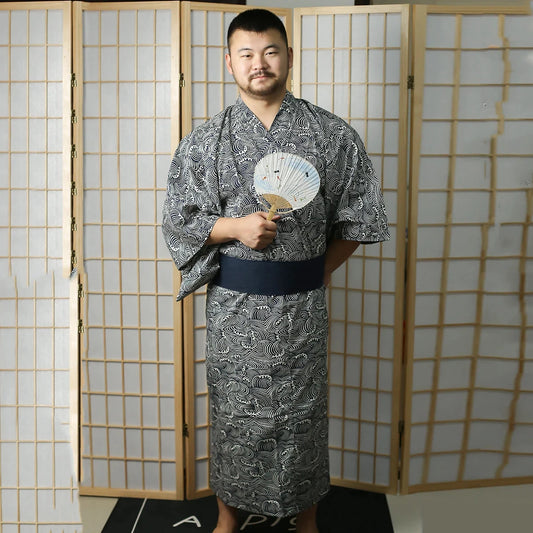
The main difference between a yukata and a kimono is the lining and fabric. Kimono are traditionally made of silk, often lined, and worn year-round with multiple layers and specific undergarments. Yukata are unlined, made of lighter cotton, and worn primarily in summer, often directly over underwear.
Choosing the Right Kimono for US Occasions
This is where the rubber meets the road, isn't it? Translating centuries of Japanese tradition into the context of contemporary American events can feel a bit like trying to fit a square peg in a round hole. However, with a bit of understanding and a dash of creativity, you can absolutely choose the perfect kimono for your US-based occasion, honouring its heritage whilst making a unique fashion statement. When considering a kimono for a US event, my first piece of advice is always to think about the Western equivalent of the formality. Is it a black-tie event? A smart casual gathering? A summer BBQ? This will guide your choice significantly. For instance, if you're invited to a formal evening gala, a furisode (if unmarried) or an irotomesode (if married, with 3 or 5 crests) would be an exquisite and perfectly appropriate choice. The grandeur of these kimono naturally aligns with the formality of such events. For semi-formal events like sophisticated dinner parties, art gallery openings, or even some business receptions, a houmongi or a tsukesage would be ideal. Their elegant patterns and refined nature make them a wonderful alternative to a cocktail dress or a formal suit. If you opt for an Edo Komon with one or three crests, you're also hitting that sweet spot of smart casual to semi-formal, offering a subtle nod to traditional elegance.My Top Tip for US Kimono Wearers
Always consider the overall aesthetic of the event. While a furisode is highly formal, its vibrant patterns might clash with a very minimalist Western black-tie dress code. An irotomesode or a well-chosen houmongi can offer formal elegance that blends more harmoniously with diverse settings, especially if you're not Japanese.
Frequently Asked Questions
The most formal type of kimono depends on marital status. For unmarried women, the furisode is the pinnacle of formality, recognisable by its long, "swinging" sleeves (100-115cm+). It's typically worn for coming-of-age ceremonies, graduations, and as a guest at weddings. For married women, the kurotomesode, a black kimono with five family crests and patterns only below the waist, is the most formal. It is reserved for mothers of the bride or groom and other close relatives at weddings, signifying deep respect and marital status.
Traditionally, the furisode is exclusively worn by unmarried women in Japan. Its long, flowing sleeves symbolise youth and eligibility for marriage. Once a woman marries, she typically transitions to shorter-sleeved kimono like the tomesode or houmongi. While there are no strict "kimono police" outside of Japan, wearing a furisode as a married woman would be considered culturally unconventional. If you wish to wear a highly formal kimono and are married, an irotomesode (a coloured formal kimono with crests) or a houmongi would be the appropriate and elegant choice.
For a casual gathering, a komon or a yukata would be your best choice. A komon features a repeating pattern all over the garment and is considered everyday wear, perfect for shopping, casual dinners, or informal parties. It offers a stylish yet relaxed look. A yukata, an unlined cotton garment, is even more casual and is typically worn in summer for festivals, fireworks, or simply relaxing at home. Both are excellent options for a comfortable and culturally rich outfit at a relaxed US event, offering ease of wear and beautiful aesthetics without the high formality.
Tags:
Previous
Kimono vs. Yukata: Understanding the Key Differences for US Enthusiasts
Next
Is it Cultural Appropriation to Wear a Kimono? A Respectful Guide for Non-Japanese